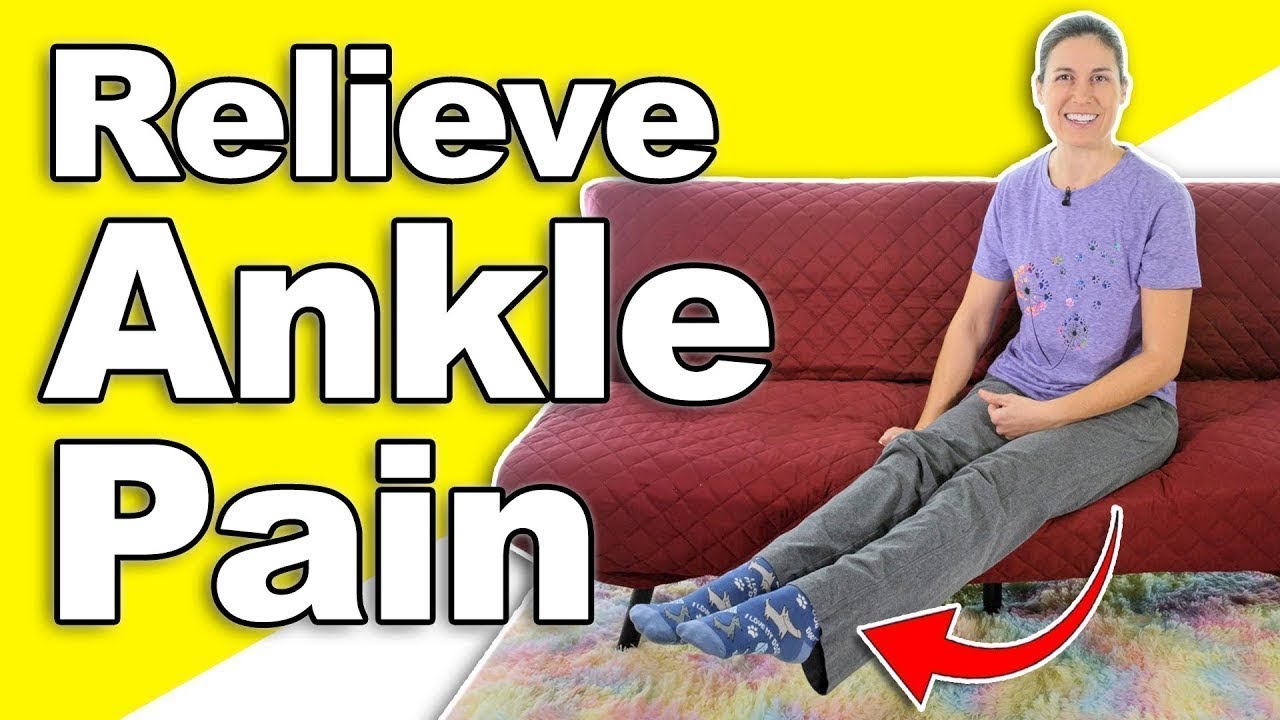
 Peripheral neuropathy is basically when you have damage to your peripheral nerves from either a trauma or disease. This can cause your hands and/or feet become numb and tingly. I’ll focus on the feet/legs for this video.
Peripheral neuropathy can be caused from diabetes, medications, or even chemotherapy, as well as many other things. Having good flexibility and strength in these areas will help.
The first stretch will be a calf stretch. Sit on the ground with your legs straight out in front of you. You can bend the leg you are not stretching towards you. Put a belt, towel, or dog leash around the ball of your foot. Keep your back and knee straight, and relax your ankle. Pull your foot towards you with the strap until you feel a stretch. Hold this for 30 seconds, and do it three times on each side.
Next are ankle pumps. With your legs straight out in front of you, place a roll just under your ankle so your heel can move freely. Trying to keep your leg straight and moving only at your ankle, pull your foot up towards you, and then push it down like you are pushing on a peddle. Then you will do ankle circles. Again, try not to move your whole leg. Keep the movement at the ankle. Do ten one direction, and then reverse it and do ten the other direction.
Now you will do a simple straight leg raise (SLR). You want to squeeze your muscles tight to lock out the knee and pull your toes towards your head to keep the whole leg straight. This will work your hip flexor muscles when you lift your leg off the ground. Use slow controlled movements to make sure you are using the muscles and not momentum. Start off with ten, and work your way up.
Then, you are going to lie on your side. The top leg is going to stay straight and pull your toes up towards you. Keep your body in a straight line as well. This is going to work your hip abductor muscles. Then you are going to work the bottom leg working your hip adductor muscles. Same as above, keep the leg straight. Start with ten of each of these, and do both sides.
In standing, you will do a heel/toe raise off the ground. Stand with your feet about shoulder width apart, come up on your toes as high as you can. Try not to lean forward, but bring your body straight up and slowly come back down. Push off as much as you can so your heel leaves the ground. Then lift your toes off the ground, alternating back and forth. Start off with ten and work your way up to 20-25.
The last exercise will be a balance series. Stand on one foot, but hold onto something sturdy. Try to balance for 30 seconds to a minute. When that becomes easy, just use one finger one each side. Then just one finger for balance, and finally try balancing without holding on at all.
Related Videos:
You may also like