How to Use a Percussion Massage Gun for Back Pain Relief
Sponsored Content: This video contains paid product placement. Thank you to iReliev for sponsoring this video and providing Doctor Jo with a free Percussive Massager to use. If you purchase products from these links/ads, Doctor Jo will earn a commission from qualifying purchases.
Percussive Massage Therapy using a massage gun (aka percussion massager) for back pain relief uses fast, soft pulses over a short amount of time to get deep down into the muscle fibers.
The continuous taps help muscles relax and heal. A massage gun works great on back pain, but make sure to be aware of the precautions before beginning. Focusing on areas like the latissimus and erector spinae muscles is a good place to start.
Like a traditional massage, a percussion massager helps to reduce inflammation and increasing circulation. It can help relax tight muscles, break up scar tissue and adhesions, and minimize muscle soreness and tension. Some studies have found percussive therapy to be as effective as massage in preventing DOMS (delayed onset muscle soreness).
In this video, I’m using the iReliev Wireless Percussion Massager. In addition to being wireless, the unit is very quiet, and it comes with four different head attachments to target various areas. It also includes a nice carrying case to keep everything organized and in one place.
Finding a comfortable position to sleep at night can be challenging for some people. People who suffer from back pain and sleep on their backs might find these tips helpful to get a better night’s sleep
When trying to find the perfect mattress to help relieve and prevent back pain, the main thing to look for is a mattress that has the right amount of support to help keep your spine in proper alignment, or a neutral position. The mattresses designed by Back Science are designed specifically to help improve overall sleep posture, keep the spine optimally aligned, and reduce muscle and joint pressure throughout the back and neck.
Lower back pain can often be relieved, and even prevented, by strengthening the core. So here are progression exercises to help strength the core in the front, side, and back.
The upper back can be a hard area to stretch. Tight rhomboid muscles and other muscles around the shoulder and neck can cause upper back pain. My favorite stretch for the upper back area is a seated rhomboid stretch.
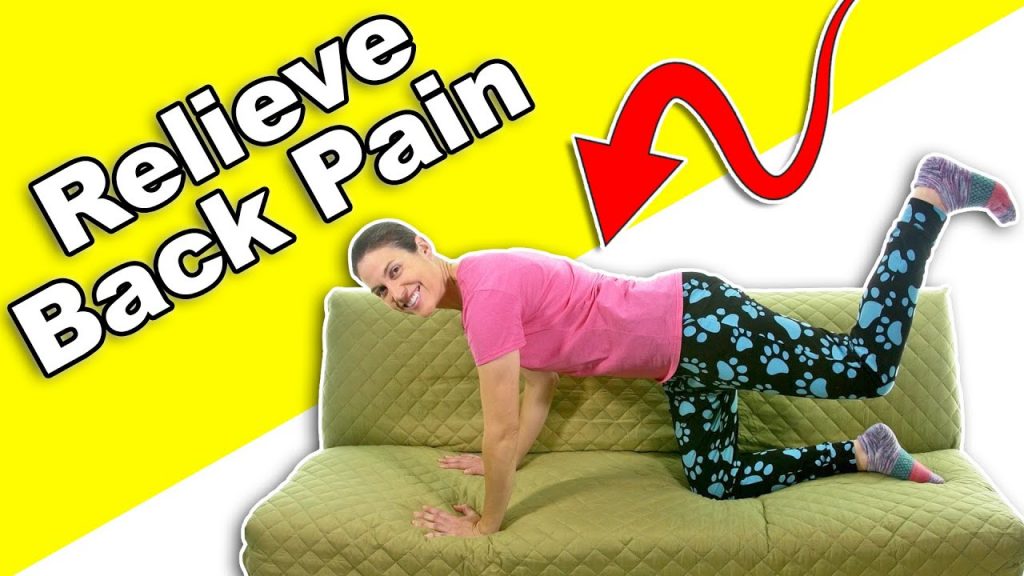
This back pain relief exercises routine can help strengthen, relieve pain, and loosen up the muscles around the back and the hip area. These back exercises are done in real time, so it’s easy to follow along with the routine.
Getting Back Pain Relief can be a daily challenge, whether the back pain occurs in the morning after waking up or at the end of a long day. This guided, real-time back stretching routine is designed to help relieve back pain, back stiffness, and improve back flexibility, whether you are starting or ending your day (or anywhere in between).
People who have back pain will often experience it when they first get up in the morning. These quick stretches should help relieve back pain before even getting out of bed!