Knee pain is very common, and OA or osteoarthritis is one of the main causes of knee pain. It can also be caused by weakness, tendonitis, or bursitis. In more severe cases, you might have injured your meniscus or ligaments. This video will show you some great stretches to keep the pressure from tight muscles off your knee joint.
The first stretch is bending the knee, or knee flexion stretch. You can use a belt or dog leash to help you slide your foot towards you. You can do this 10 to 15 times with a little pause at the end stretch. Next you want to move your kneecap, or patella around. This is important because your patella is attached to your quadriceps tendon and your patellar tendon. When those are tight, it is hard to bend your knee. Your leg needs to be straight and relaxed. You can push the patella up and down, superior and inferior, and side-to-side, medial and lateral. You can do this for 2 to 3 minutes.
Now you are going to stretch your calf muscle, or gastrocnemius muscle. Keep your leg straight, and take the belt or leash and place it on the ball of your foot. Relax your leg and then pull your foot towards you. Hold the stretch for 30 seconds, 3 times. Next is a hamstring stretch. There are many ways to stretch them, and you can check out the hamstring stretches video for other ways to stretch them. The most important part of this stretch is to keep your back straight. Many people try to curl their backs to be able to touch their toes. Your hamstrings are attached to what is called the ischial tuberosity, or your butt bone. So if you bend at your back, you are not going to get a good hamstring stretch. Try to bend at your hips.
The last stretch will be on your stomach, or in prone. This will stretch your quadriceps muscle. Take a belt or dog leash and wrap around your foot/ankle. Take the strap and gently pull your foot towards your buttocks until you feel a stretch. Hold for 30 seconds and do it 3 times.
Knee stretches & exercises are a great way to help relieve knee pain. But with nearly 1,000 videos on the Ask Doctor Jo YouTube Channel, it can be hard to find the best knee video for you. So here's a rundown of some of my favorite Knee Pain Relief Videos! They range from one simple stretch or exercise to a realtime video and a demo video. Just pick the one that's best for you!
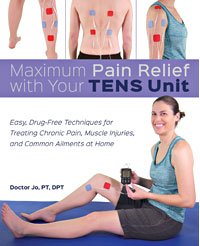
A TENS / EMS Unit can be a great tool for helping to reduce and relieve knee pain. It can also help retrain weak or injured muscles. Here are a few wireless & wired pad placements to help relieve knee pain.
Improving circulation and blood flow in your legs is important for everyone, but it’s especially important for seniors who might not move as much and for people who sit all day. The simple exercises in this video should help.
Patellofemoral pain is pain under and around the kneecap. Sometimes when your kneecap does not track properly in the groove, it can rub on either side of the bone. If this occurs for a long period of time, it can cause irritation, inflammation, and pain.
Hamstring pain or a hamstring strain can be very painful. The hamstrings help us walk, lift our legs backwards, and bend our knees. When you have a hamstring strain, all these movements can be painful. These hamstring stretches and exercises should help relieve a hamstring strain.
These knee pain relief stretches & exercises don’t necessarily need to be done in bed, but they may help relieve knee pain in the morning before getting up, and/or when going to bed at night.
Knee pain can come from weakness and/or tightness in one of the muscles that cross the knee joint. These knee stretches & exercises may help provide knee pain relief.
Peripheral neuropathy is basically when you have damage to your peripheral nerves from either a trauma or disease. This can cause your hands and/or feet become numb and tingly. I'll focus on the feet/legs for this video.

 Knee pain is very common, and OA or osteoarthritis is one of the main causes of knee pain. It can also be caused by weakness, tendonitis, or bursitis. In more severe cases, you might have injured your meniscus or ligaments. This video will show you some great stretches to keep the pressure from tight muscles off your knee joint.