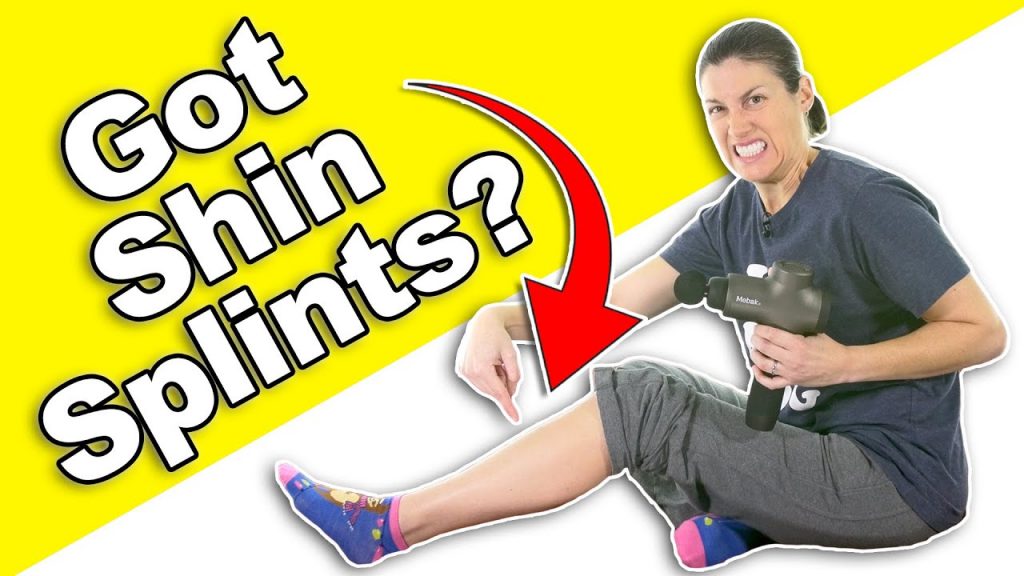
If you frequently get shin splints, here are some simple stretches to help prevent or relieve them. Once you have checked this video out, you can watch the shin splint strengthening video to help keep them strong and prevent further injuries.
Shin splints occur very often in runners who are training for long distance running. The tibialas muscles become inflamed and irritated. Most of the time it is your anterior tibialis muscle, the one in the front, but occasionally they can be your posterior tibialis muscle, the one in the back. Make sure to go to a doctor to get evaluated because sometimes you can have a stress fracture instead of shin splints.
Start off by sitting in a long sit with your legs straight out in front of you. Point your toes downward as far as you comfortably can. You can add a little pressure to get an extra stretch. For more of a stretch, roll over and flatten your feet in a push up position, and push up on the top of your feet. Then you can try kneeling back onto your feet with your toenails on the floor, and lift up onto your toes as seen in the video.
Now you will see some stretches with a noodle or foam roll. Place the roll on the top of your knee, and roll it down your shin or anterior tibialis. Apply more body pressure to get more of a stretch. Then you can turn over and do the same thing with your calf. Roll down your calf muscle, or gastrocnemius muscle, and apply more body pressure for more of a stretch.
This knee pain relief routine can help strengthen and loosen up the muscles around the knee and hip area. These knee exercises are done in real time, so it’s easy to follow along with the routine.
Percussive Massage Therapy for knee pain relief is a new rehab treatment that uses fast, soft pulses over a short amount of time to get deep down into the muscle fibers.
A stiff knee can be caused by tight muscles around the knee, injuries, or even arthritis. Some simple stretches to loosen up the muscles around the knee should help.
Sore legs are common when starting a new workout program or when exercising a little too hard, especially on leg day. These stretches can help relax sore and tight leg muscles & provide pain relief.
Knee pain can come from weakness and/or tightness in one of the muscles that cross the knee joint. These knee stretches & exercises may help provide knee pain relief.
Patellofemoral pain is pain under and around the kneecap. Sometimes when your kneecap does not track properly in the groove, it can rub on either side of the bone. If this occurs for a long period of time, it can cause irritation, inflammation, and pain.
Bowed legs (aka bowlegs, bow legs, or genu varum) can come from weak & tight muscles, bone deformations, and/or degeneration. These stretches & exercises are designed to help if it’s coming from weak and/or tight hip muscles.
The ACL helps keep the knee stable, and prevents it from sliding forward. When you have a torn ACL, your knee can become painful and unstable. These stretches and exercises are for a non-operative or pre-operative injury.
With Shin Splints, pain can be felt on the front (anterior shin splints) or on the inside/medial ankle (posterior shin splints). Using a massage gun on the painful area, as well as stretches & exercises, can help with pain relief.

 If you frequently get shin splints, here are some simple stretches to help prevent or relieve them. Once you have checked this video out, you can watch the shin splint strengthening video to help keep them strong and prevent further injuries.