How to Use a Rebounder for Physical Therapy & Recovery
Sponsored Content: This video contains paid product placement. Thank you to FED Fitness for sponsoring this video and providing Doctor Jo with a free BCAN BT4 Soft Land Pro Rebounder to use. If you purchase products from these links/ads, Doctor Jo will earn a commission from qualifying purchases.
A rebounder is a mini trampoline that uses bounce and movement to improve balance, posture, core strength, and endurance. Rebounder physical therapy involves exercises performed on the rebounder and can be used to treat many different injuries.
For today’s video I’m using the FED Fitness BCAN BT4 Soft Land Pro Rebounder.
Some common injuries physical therapy on a mini-tramploine can help with include injuries to the shoulder, ankle, hip, knee, and back. It can also help with recovering after a stroke and with Parkinson’s disease.
Here are some of the other things using a rebounder for physical therapy can help with:
• Strengthens the core, leg, gluteal, and lower back muscles
• Stimulates the lymphatic system
• Improves balance, coordination, flexibility, and overall motor skills
• Helps with pelvic floor health as bouncing works muscles of the deep core that help prevent urinary incontinence and stabilize hip joints
• Increased sensory integration and spatial awareness
Living with fibromyalgia and other chronic pain conditions can be an overwhelming experience, characterized by widespread pain that affects various parts of the body. One of the most beneficial approaches to help manage this pain is to incorporate gentle standing stretches and exercises into your daily routine.
Living with fibromyalgia and other chronic pain conditions can be challenging. One of the most common symptoms is widespread pain, affecting various parts of the body. Simple seated stretches and exercises can help manage these symptoms
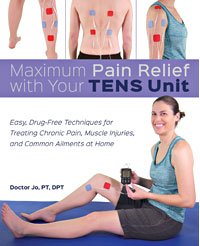
A TENS Unit helps reduce pain and increase circulation. Basically the vibration of the TENS follows the same pathway as the pain pathway to the brain and helps cancel it out. Learn more about TENS in this video.
Exercises for Osteoporosis can help prevent further decline and help protect the bones. It’s important to move safely if you have osteoporosis: Maintain good spinal alignment by keeping hips and shoulders in alignment (no twisting). These gentle exercises when done at one’s own pace may help.
The pelvic floor muscles are often overlooked, and people don’t think about strengthening them. Since the pelvic floor muscles are small, it doesn’t take a lot of movement to work them, so it’s best to start with a little and slowly progress.
If you work on a computer all day, and use a traditional mouse, you may have some wrist, hand, or finger pain, which can sometimes lead to elbow, shoulder, or neck pain as well. Using an ergonomic mouse can help keep your wrist and hands in a neutral position to help relieve and prevent pain in these areas.
Maintaining a strong and stable core is essential for overall health and fitness. If you’ve already mastered my beginner & moderate core exercises, it’s time to progress to more advanced core strengthening exercises. These exercises can help take your core strength to the next level, ensuring a strong and healthy body.
The Birch Luxe Natural Mattress was ranked one of the Best Organic Mattresses for 2026 by Sleep Foundation, and I got a chance to try it out. In this video, I'll explore some of the mattress features that stood out and are important to have in ANY mattress, and highlight some of the Natural and Organic features of the Birch Luxe!
Benign Paroxysmal Positional Vertigo, better known as BPPV, can literally stop you in your tracks. Make sure you are properly diagnosed with BPPV before trying these because vertigo symptoms can be an indication of something more serious.