If you frequently get shin splints, here are some simple stretches to help prevent or relieve them. Once you have checked this video out, you can watch the shin splint strengthening video to help keep them strong and prevent further injuries.
Shin splints occur very often in runners who are training for long distance running. The tibialas muscles become inflamed and irritated. Most of the time it is your anterior tibialis muscle, the one in the front, but occasionally they can be your posterior tibialis muscle, the one in the back. Make sure to go to a doctor to get evaluated because sometimes you can have a stress fracture instead of shin splints.
Start off by sitting in a long sit with your legs straight out in front of you. Point your toes downward as far as you comfortably can. You can add a little pressure to get an extra stretch. For more of a stretch, roll over and flatten your feet in a push up position, and push up on the top of your feet. Then you can try kneeling back onto your feet with your toenails on the floor, and lift up onto your toes as seen in the video.
Now you will see some stretches with a noodle or foam roll. Place the roll on the top of your knee, and roll it down your shin or anterior tibialis. Apply more body pressure to get more of a stretch. Then you can turn over and do the same thing with your calf. Roll down your calf muscle, or gastrocnemius muscle, and apply more body pressure for more of a stretch.
With a total knee replacement, it’s important to do physical therapy on the knee (prehab) BEFORE the knee replacement because the stronger and more flexible the knee is before surgery, the better the recovery and outcomes will be.
This standing stretching routine for seniors focuses on simple stretches that can help loosen up the muscles in the neck, shoulders, back, hips, and knees.
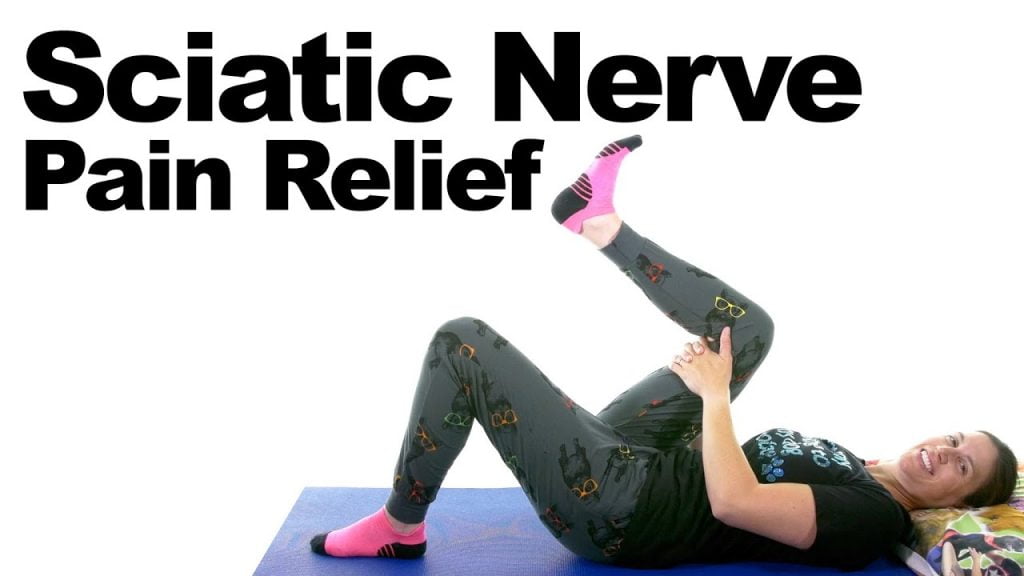
Sciatic nerve pain often comes from tight muscles along its pathway. The hamstrings, IT band, and adductors can all contribute to compressing the sciatic nerve. These stretches might help.
Doctor Jo shows some simple stretches to help relieve sciatic nerve pain. Some of the best stretches to help get rid of sciatic nerve pain are piriformis stretches.
An achy knee is often caused by tightness or weakness in the muscles around the knee. These knee stretches and exercises should help relieve the knee pain.
Varicose veins are a result of poor circulation in your legs. When the blood is not flowing properly, it pools up in the veins, and causes them to bulge out and become cord-like. General exercises can help provide relief.
Knee pain can be caused by many things. Often a tight quadricep muscle can cause knee pain. My favorite stretch for this area is a quad stretch. It’s great for the knee, hip, and thigh area.

 If you frequently get shin splints, here are some simple stretches to help prevent or relieve them. Once you have checked this video out, you can watch the shin splint strengthening video to help keep them strong and prevent further injuries.