Tension headaches are very common, and they can really shut you down. Stress is the number one cause of tension headaches. With some simple stretches and exercises, you can relax the muscles that are causing the pain.
To start off, you want to loosen up your neck muscles with some active range of motion (ROM). Turn your head from side to side or rotate it. Just turn until you feel some tension, and then turn back the other way. Then side bend your head where you are trying to touch your ear to your shoulder. You are not bringing your shoulder up to your ear, but you are bringing your ear down. Then bring your head up and down like you are looking at the ceiling and then looking at the floor. Do each of these about 5-10 times holding 3-5 seconds. If you are not feeling much of a stretch, then you can add some pressure with your hand. Hold these a little longer for about 10-15 seconds each.
Then you are going to do isometric exercises in each direction. Basically this is when you activate the muscle, but you are not moving it. You can do this by gently pressing into your hand in each direction. Hold each one of these for 3-5 seconds.
Now you can do shoulder shrugs where you are bringing your shoulders upwards towards the ceiling. Do about 10-15. Then you can do shoulder circles; 10 one way, and then reverse it. Next do some shoulder squeezes where you are squeezing your shoulder blades together. Imagine someone has their hand on your spine and you are trying to squeeze their hand with your shoulder blades. Hold 3-5 seconds and do about 10.
The last exercise is a chin tuck. This can be done lying down. Roll up a towel and place it in the curve of your neck for support and for a target. You want to tuck in your chin towards the ground. So it’s not tucking it towards your chest, but actually trying to push it downwards where your neck muscles push into the towel. Do that about 10 times.
A rebounder is a mini trampoline that uses bounce and movement to improve balance, posture, core strength, and endurance. Rebounder physical therapy involves exercises performed on the rebounder and can be used to treat many different injuries.
Some of the most common accidents and injuries happen doing everyday activities. Walking, getting in and out of the shower, and even going up and down stairs can be dangerous for people with limited mobility. These simple exercises should help prevent these types of injuries.
Bell’s Palsy is the sudden weakness of your facial muscles on one half of the face. These exercises may seem like you are just making funny faces, but this will help get the weak muscles working again.
Fibromyalgia and other chronic pain conditions can cause pain all over the body. This is often called widespread pain. The key to finding relief with stretches and exercises with these types of conditions is to find the right amount of intensity for you. Lying down while performing simple stretches and exercises often helps.
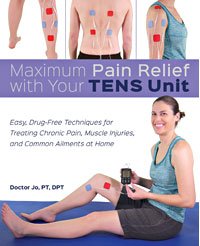
TENS units & EMS units can be very helpful when recovering from an injury or surgery. The two are very different, but often come together in one unit like the iStim EV-805 unit I use in this video.
Vagus nerve stimulation uses gentle electrical impulses to stimulate the vagus nerve. The vagus nerves control our parasympathetic system (resting and digesting) by sending signals to the brain to release calming neurotransmitters.
Do you find yourself plopping down in a chair? This video will show you some simple tips on how to sit down and stand up safely from a chair to prevent that plopping!
Exercising your tendons isn't something most people think about since tendons aren’t muscles, but tendon-specific exercises can improve joint health, reduce pain and stiffness, and improve speed and agility.

 Tension headaches are very common, and they can really shut you down. Stress is the number one cause of tension headaches. With some simple stretches and exercises, you can relax the muscles that are causing the pain.