Tension headaches are very common, and they can really shut you down. Stress is the number one cause of tension headaches. With some simple stretches and exercises, you can relax the muscles that are causing the pain.
To start off, you want to loosen up your neck muscles with some active range of motion (ROM). Turn your head from side to side or rotate it. Just turn until you feel some tension, and then turn back the other way. Then side bend your head where you are trying to touch your ear to your shoulder. You are not bringing your shoulder up to your ear, but you are bringing your ear down. Then bring your head up and down like you are looking at the ceiling and then looking at the floor. Do each of these about 5-10 times holding 3-5 seconds. If you are not feeling much of a stretch, then you can add some pressure with your hand. Hold these a little longer for about 10-15 seconds each.
Then you are going to do isometric exercises in each direction. Basically this is when you activate the muscle, but you are not moving it. You can do this by gently pressing into your hand in each direction. Hold each one of these for 3-5 seconds.
Now you can do shoulder shrugs where you are bringing your shoulders upwards towards the ceiling. Do about 10-15. Then you can do shoulder circles; 10 one way, and then reverse it. Next do some shoulder squeezes where you are squeezing your shoulder blades together. Imagine someone has their hand on your spine and you are trying to squeeze their hand with your shoulder blades. Hold 3-5 seconds and do about 10.
The last exercise is a chin tuck. This can be done lying down. Roll up a towel and place it in the curve of your neck for support and for a target. You want to tuck in your chin towards the ground. So it’s not tucking it towards your chest, but actually trying to push it downwards where your neck muscles push into the towel. Do that about 10 times.
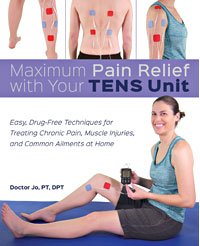
TENS units & EMS units can be very helpful when recovering from an injury or surgery. The two are very different, but often come together in one unit like the iStim EV-805 unit I use in this video.
Struggling to get a good night’s sleep? You’re not alone! But here’s some good news: short strengthening exercises in the evening (like the ones in this video) can help improve sleep quality so you wake up refreshed.
Vagus nerve stimulation uses gentle electrical impulses to stimulate the vagus nerve. The Vagus Nerve plays a key role in the parasympathetic nervous system, helping regulate rest, digestion, heart rate, and more.
If you're a Retail Worker and you stand all day, that can put a lot of stress on your body, especially your back, neck, feet, and hips. These stretches and exercises are great for retail workers, teachers, factory workers, or anyone who stands a lot throughout the day.
Relieving Chronic Pain through simple stretches and exercises starts with finding the right movements for your body. In this video, I'll show you gentle stretches and exercises to help relieve chronic pain without causing a flare-up.
Hot & cold therapy can help the healing process during an injury, and it can also help reduce acute and chronic pain. But which one should you use? Here are some general rules for using hot verses cold.
Core exercises are very important to have a healthy and stable back as well as the whole body. The core is not only the front, sides, and back of the trunk, but it is also the pelvic floor. When first starting core exercises, it is best to try modified ones first and then progress to harder movements as the core gets stronger.
Sitting in front of a computer all day for school or work can tighten & weaken muscles in the neck, shoulders, chest, hips, knees, and feet. These sitting stretches & exercises may help.

 Tension headaches are very common, and they can really shut you down. Stress is the number one cause of tension headaches. With some simple stretches and exercises, you can relax the muscles that are causing the pain.